When choosing a kitchen knife, two countries stand out: Germany and Japan. Both have legendary reputations for crafting exceptional blades, but their approaches differ greatly in philosophy and execution. Japanese knives excel at precision and sharpness, while German knives offer durability and versatility.
Understanding the key differences in blade geometry, maintenance requirements, and cutting capabilities will help you select the right tool for your kitchen.
Differences in German and Japanese steel composition and hardness create unique advantages for different cooking styles and skill levels.
| Feature | German Steel | Japanese Steel |
|---|---|---|
| Hardness | 57 HRC | 60-63 HRC |
| Carbon Content | Lower | Higher |
| Maintenance | Easy | Requires skill |
| Durability | More flexible | More brittle |
German knives feature softer stainless steel, usually X50CrMoV15 stainless steel or similar alloys with lower carbon content. This German steel reaches around 57 HRC on the Rockwell hardness scale.
Softer steel makes these blades forgiving and easy to maintain. You can sharpen them at home without special skills or equipment.

Japanese knives feature a much higher carbon content. This Japanese steel can be hardened to 60-63 HRC, making much harder blades.
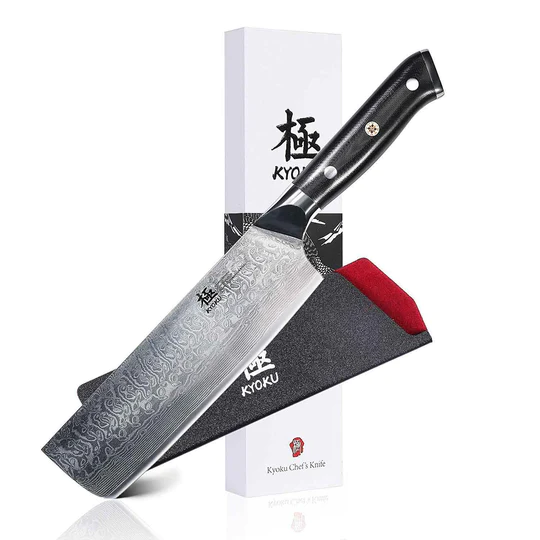
Some premium Japanese knives feature Damascus steel with layered patterns. The harder steel gives superior edge retention but makes the blade more brittle.

German knives have a curved blade profile that works well for rocking motions on cutting boards. This design lets you keep the tip in contact with the board while chopping.
The blade geometry includes a full bolster and thicker spine for added weight. Brands like Zwilling J.A. Henckels from Solingen represent this traditional European approach.

Japanese blade shapes support precision cutting with straight downward motions. Many have a demi-bolster or no bolster at all for better control.
The thinner profile reduces drag when slicing ingredients. This design comes from the Edo period when Japanese craftsmen developed specialized cutting tools.
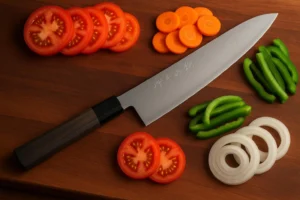
Japanese knives also have straighter edges with minimal curve. The Gyuto knife, Japan’s version of a chef’s knife, shows this geometry well.

German knives use synthetic handles riveted to a full tang. The knife handle materials include polymer or wood composites for durability.
These knives have blade-heavy balance due to thick steel and a full bolster. The weight helps with chopping but can cause fatigue during long use.

Japanese handles often use lighter wood construction without rivets. The tang extends partially into the handle, shifting the balance point.
This design moves weight toward your hand rather than the blade, reducing fatigue during detailed knife work or long prep sessions.
Handle materials on Japanese knives often include magnolia or oak wood. Some modern versions use synthetic materials but keep the traditional lightweight feel.
The ergonomic differences affect your cutting technique and comfort during different kitchen tasks.

Japanese knives excel at precision cutting and maintain razor-sharp edges longer, while German knives offer better durability for heavy-duty tasks and need less specialized maintenance. Your choice depends on your cutting techniques, maintenance preferences, and kitchen tasks.
Japanese knives usually hold their sharp edge 2-3 times longer than German knives because of harder steel. You’ll sharpen them less often, but sharpening requires more skill.
German knives lose their edge faster but recover quickly with a honing rod. Japanese knives stay sharp longer but need careful attention when dull.
Your cooking style determines which knife works better in your kitchen. Japanese knives shine with precise, controlled cuts.
Japanese knives work better for tasks requiring precision. These knives offer better blade control for detailed work.
German knives excel at robust kitchen tasks like crushing garlic or cutting through tough ingredients. The full bolster protects your fingers during aggressive cutting.

German knives withstand more abuse and recover from damage better than Japanese knives. You can use them daily without worrying about chipping or breaking.
While Japanese knives can chip if dropped or used improperly, German knives bend rather than break under stress.
Professional kitchens often choose German knives for their reliability under heavy use. Home cooks who value sharpness and precision prefer Japanese options despite higher maintenance needs.
German and Japanese knives differ in blade thickness, steel hardness, and edge angles. These design choices affect how you maintain, handle, and use each knife type.
German knives feature thicker, heavier blades, usually 2-3mm at the spine. The blade profile has a curved belly design that works well for rocking cuts on a cutting board.
German knives use a full tang construction where the steel extends through the entire handle. This creates a balanced weight between the blade and handle.
Japanese knives have thinner blades, usually 1-2mm thick at the spine. They have straighter edges with minimal belly, making them ideal for precise push and pull cutting motions.
Japanese knives often use partial tang construction or different handle attachment methods. This puts more weight toward the blade, creating a different balance point.
German knives usually use softer stainless steel alloys with a hardness rating of 56-58 HRC. Common steel types include X50CrMoV15 and similar high-carbon stainless formulations that resist staining and corrosion.
Japanese knives use harder steel alloys ranging from 58-65 HRC. Popular steel types include VG-10, Aogami (Blue Steel), and Shirogami (White Steel) that hold sharper edges longer.
The steel composition differences affect edge retention and maintenance needs. Harder Japanese steels stay sharp longer but need more careful handling.
German steels offer better durability for heavy-duty tasks. They can handle more abuse without chipping or breaking compared to harder Japanese steels.
German knives have a 20-22 degree angle per side, creating a total edge angle of 40-44 degrees. This wider angle provides durability and forgiveness during use.
Japanese knives use sharper 15-17 degree angles per side, totaling 30-34 degrees. Some traditional Japanese knives have even sharper angles of 12-15 degrees per side.
The sharper angles on Japanese knives create cleaner cuts through food. You can slice delicate items like tomatoes and fish without crushing or tearing.
German knife angles sacrifice some sharpness for durability. The wider angles resist chipping and damage when cutting through bones or tough materials.

German knives need less frequent sharpening due to their durable steel. You can maintain them with basic sharpening tools like pull-through or electric sharpeners.
Japanese knives need more careful maintenance and frequent touch-ups. The harder steel requires whetstones for sharpening, and electric sharpeners can damage the blade.
You can put German knives in the dishwasher without major damage, though hand washing extends their life. The stainless steel resists rust and corrosion well.
Japanese knives require hand washing and immediate drying to prevent rust. Carbon steel varieties need special care to avoid staining and corrosion from acidic foods.
German knives balance at the bolster or just forward of the handle. This creates a stable, controlled feel that works well for rocking motions and heavy-duty tasks.
Japanese knives balance toward the tip of the blade. This forward balance gives you more precision for detailed cutting work.
German knives typically weigh 8-10 ounces, while Japanese knives often weigh 5-7 ounces. The weight difference affects how each knife feels in your hand.
Handle designs also vary significantly between the two styles. German knives use ergonomic polymer or composite handles, while Japanese knives often have traditional wooden handles.
Quality German chef knives from established brands usually cost $80-300 for home cooks. Professional-grade German knives can reach $400-600 for premium models.
Japanese knives have a wider price range, from $100-500 for quality options. Handmade Japanese knives from master craftsmen can cost $800-2000 or more.
Entry-level options exist in both categories. You can find decent German knives starting around $50, while basic Japanese knives begin around $70-80.
The price differences reflect manufacturing methods and materials. Mass-produced German knives cost less than hand-forged Japanese blades, but both types perform well in their price ranges.