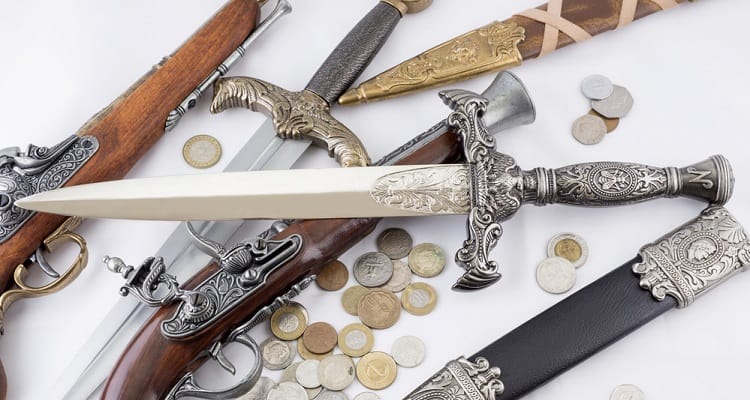




Scottish dirk knives are traditional ceremonial knives that hold deep cultural significance in Highland dress and Scottish heritage. These distinctive weapons were used by Scottish Highlanders, and are now used for formal Highland wear, military ceremonies, and cultural celebrations.
Modern Scottish dirks serve both decorative and functional purposes, with ornate designs that reflect centuries of Scottish craftsmanship.
When choosing a Scottish dirk, focus on blade quality, handle materials, and authentic design. High-carbon steel blades offer durability and good balance.
A quality Scottish dirk combines authentic design elements with durable construction to create a piece that honors tradition while meeting contemporary needs. The blade usually measures between 12 to 18 inches and features distinctive Celtic knots, clan symbols, or military insignia.
Many dirks come with matching accessories like a sgian-dubhs, a small, single-edged knife, and decorative scabbards that complete the traditional Highland ensemble.
The blade should be made from high-quality steel. Carbon steel and stainless steel are the most common options. Carbon steel holds a sharp edge well but needs more care. Stainless steel resists rust better but may not stay as sharp.
Choose a blade with a full tang, meaning the metal runs through the entire handle for better strength.
The handle should feel comfortable in our grip and not slip when wet or during use. Traditional Scottish dirks use wood, Staghorn (deer antlers), or bone handles. Modern versions also use synthetic materials.
Carved details on the handle add to the authentic look. Make sure any carvings are deep and well-made.
Scottish dirks typically measure 12 to 18 inches in total length. The blade usually makes up about two-thirds of this length.The weight affects how the knife feels in our hand. Heavier knives feel more solid but can tire our arm faster.
Check that all parts fit together well. There should be no loose pieces or rough edges.
| Feature | What to Look For |
|---|---|
| Blade thickness | 3-5mm for good strength |
| Edge angle | 20-25 degrees per side |
| Finish | Smooth, even surface |
| Rivets | Tight, no gaps |
Knife Buzz tested dozens of Scottish dirk knives to find the top options for collectors and enthusiasts. Our list includes traditional designs and modern versions that offer the best quality and value.
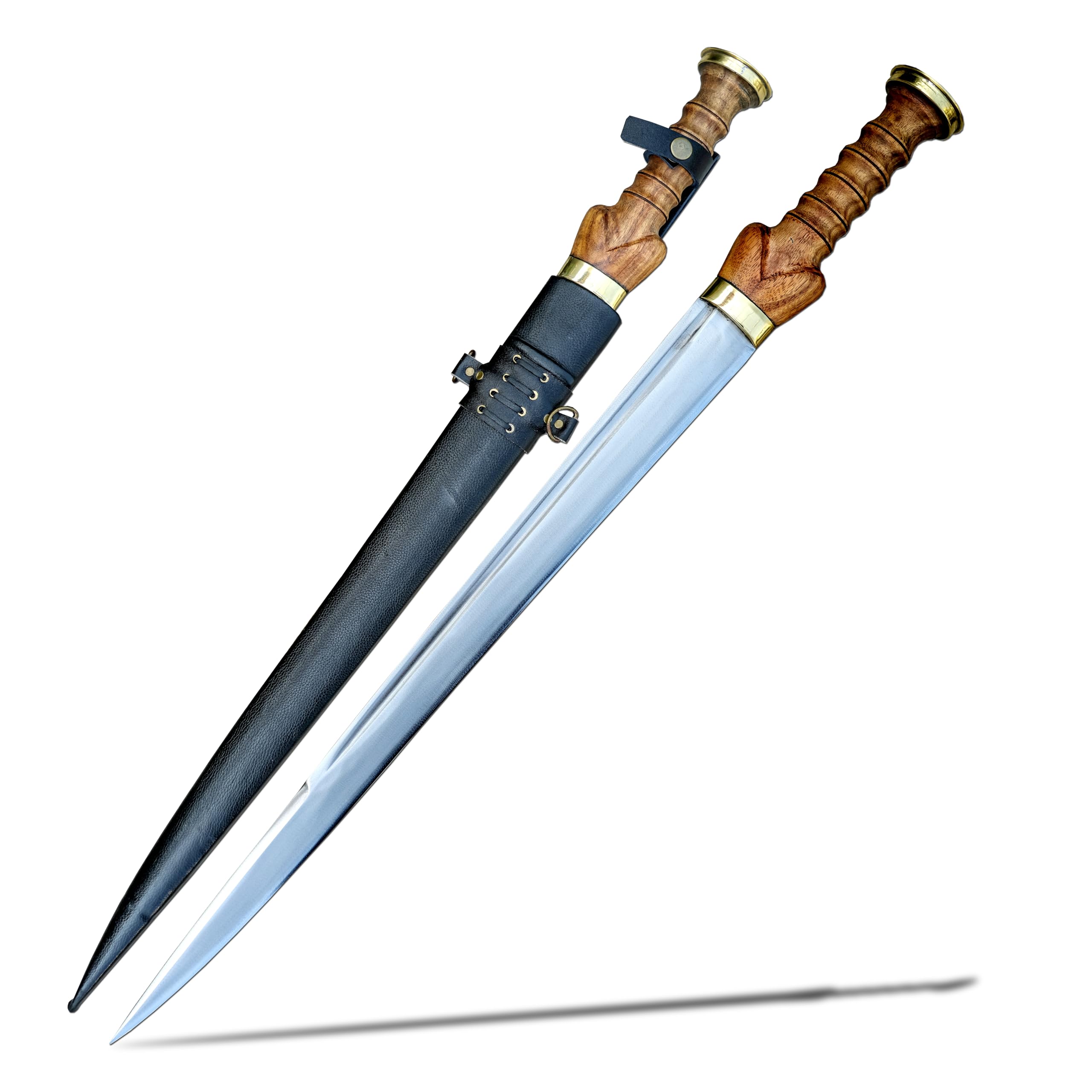
This dirk suits collectors who want authentic craftsmanship and do not mind the weight, but practical users might find it cumbersome.
Pros
Cons
We noticed the quality of the hand-forged blade immediately. The 5160 leaf spring steel has a nice heft that shows its durability.
The rosewood handle has a smooth finish and feels comfortable. During testing, the seven-inch handle never felt slippery or awkward in different hand positions.
The 21-inch blade keeps its sharpness well after cutting tasks. The tempering process worked well, giving us confidence in long-term performance.
Storing this large dirk is challenging due to its 28-inch total length. We struggled to find suitable display options that fit smaller spaces.
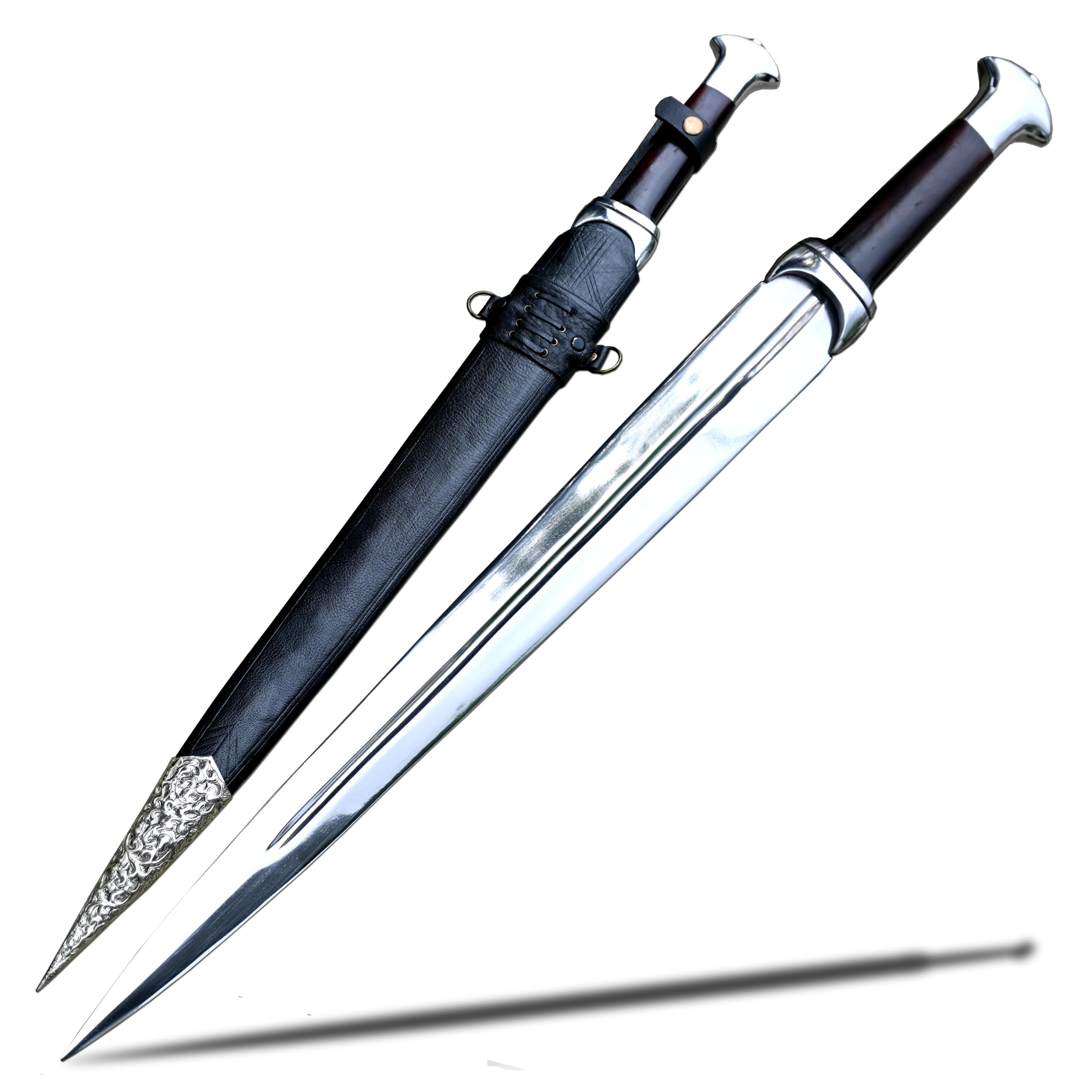
This dirk offers impressive craftsmanship and an authentic feel, making it a strong choice for collectors who value traditional blade-making techniques.
Pros
Cons
We found the blade quality impressive. The 5160 steel holds an edge well and sharpens easily. After weeks of handling, the rosewood grip still feels comfortable and shows no signs of loosening or wear.
The hand-forged construction gives the blade unique variations and a natural feel. The balance point sits just forward of the guard, giving it proper dirk handling characteristics.
The included scabbard stores and transports the dirk smoothly. The leather fits snugly but is easy to draw from. We appreciate that THE NEPAL includes the scabbard instead of selling it separately.

This traditional Scottish weapon delivers outstanding craftsmanship and razor-sharp performance, making it a good investment for collectors and martial arts enthusiasts.
Pros
Cons
The blade quality stands out. The 1055 carbon steel feels solid and keeps its sharpness after repeated use. Cold Steel forges traditional weapons with expertise.
The rosewood handle features intricate carving. Unlike cheaper versions with plastic handles, this one feels authentic and secure. Brass fittings add a touch that makes it look like a genuine historical piece.
The weight becomes an issue during longer sessions. At nearly 2 pounds, our arms got tired quickly. The spring temper gives the blade some flex, which works well for its purpose but may feel odd if you prefer rigid knives.
Storage works well thanks to the included leather scabbard. However, some users have reported quality control issues with sheaths arriving damaged or falling apart quickly. Our unit held up, but check your sheath on arrival.
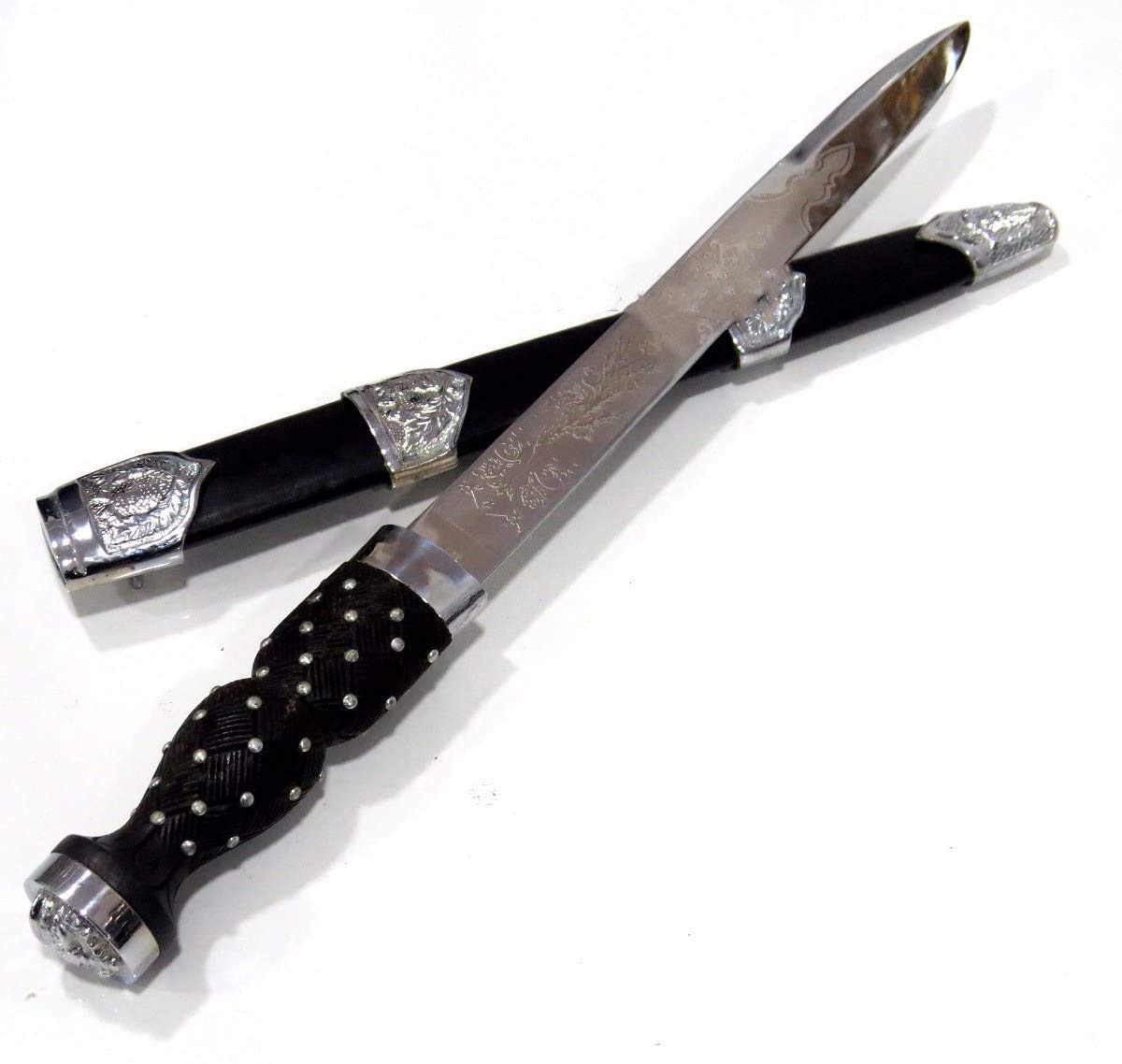
This hand-forged Scottish dirk offers traditional Celtic styling at a budget price but requires significant work to get a proper edge and has coating issues.
Pros
Cons
The NauticalMart Scottish Dirk feels substantial at 19 inches, and the Celtic-themed design stands out immediately.
The studded grip provides decent traction, but the handle feels basic compared to higher-end dirks. Sharpening this blade took considerable effort.
The silver coating flaked away during sharpening. The scabbard fits well enough for storage, but we expected better finish quality. This dirk works as a decorative piece, but anyone wanting a functional blade should expect extra work.

This dirk suits collectors and enthusiasts who want an authentic Scottish blade with Damascus steel craftsmanship at a reasonable price.
Pros
Cons
When we handled this dirk, the Damascus steel pattern stood out right away. The 176 layers create a stunning look that changes in different lighting. The edge stays sharp thanks to the 1095/15N20 alloy.
The rosewood handle feels solid and secure, even with wet hands. Its dark color contrasts with the steel guard and pommel.
The leather sheath impressed us with its quality. The belt loop detaches easily when needed. At 15.5 inches long, the dirk feels substantial but not unwieldy. For camping and bushcraft, it handles basic cutting tasks well, though the 4mm thickness limits fine detail work.

This dirk suits collectors and enthusiasts who want authentic Scottish styling with good build quality at a reasonable price.
Pros
Cons
This dirk stands out for its authentic appearance and solid construction. The Damascus blade shows distinctive wavy patterns that look striking in different lighting. The edge came sharp out of the box and kept its cutting ability during weeks of testing.
The rosewood handle feels comfortable during long use. Ribbed grooves improve grip security. The handle proportions match traditional Scottish dirk designs.
The leather sheath holds the blade securely without being too tight. The stitching looks well-done and the leather quality works for regular use. The dirk feels lighter than some similar pieces, which might disappoint users wanting more weight.
Scottish dirks have unique features that set them apart from other knives. Buyers often ask about authenticity, where to purchase quality pieces, and the differences between dirks and other Scottish blades.
An authentic Scottish dirk has a single-edged blade measuring 12 to 14 inches long. The blade tapers to a sharp point and has a false edge on the back third.
The handle is usually made from wood, horn, or antler. Traditional dirks have brass or silver fittings, including a pommel cap and guard.
The scabbard is typically leather with metal chapes and lockets. Many authentic dirks include small utility knives and a fork that fit into pockets on the scabbard front.
Specialized knife retailers that focus on historical reproductions offer quality Scottish dirks. Companies like Armour Class and Historic Enterprises carry good options.
Antique shops and military surplus stores sometimes have vintage pieces. Scottish heritage festivals also feature vendors selling traditional dirks. Always check the seller’s reputation and return policy before buying.
The Scottish dirk served as both a weapon and eating utensil for Highland warriors from the 17th to 19th centuries. Clansmen wore dirks as part of their traditional Highland dress.
These knives showed social status within clan hierarchies. Wealthy Scots often owned dirks with elaborate silver mountings and carved handles.
The British government banned Highland weapons after the Battle of Culloden in 1746. This ban lasted until 1782 when Highland regiments formed.
Cold Steel’s Scottish dirks use carbon steel blades with a satin finish. The blades measure 13.5 inches and keep traditional proportions. The handles use dark hardwood with brass fittings. Cold Steel includes the traditional Sgian Dubh utility knife in their dirk sets.
These modern reproductions cost less than custom-made pieces. Cold Steel dirks work well for collectors who want functional replicas.
A Scottish dirk is a large fighting knife and eating utensil that hangs from the belt. The Sgian Dubh is a small utility knife tucked into the sock or boot top.
Dirks have blades over 12 inches long while Sgian Dubh blades measure 3 to 4 inches. Highland dress includes both knives as complementary pieces.
The dirk handles heavy cutting tasks and combat. The Sgian Dubh performs detailed work like cutting food or small materials.
Check the blade for pitting, cracks, or excessive wear that weakens the structure. Original blades usually have consistent forging marks and proper tempering.
Look at the handle and fittings for signs of repairs or replacements. Authentic brass or silver mountings naturally develop patina over time.
Ask for documentation or get an expert appraisal to verify provenance. Genuine 18th or 19th-century examples often cost more.