


A camp knife is one of your most important outdoor tools, handling everything from food prep to firewood processing. Whether you’re car camping or backpacking deep into the wilderness, the right blade can make your trip smoother and more enjoyable.
Quality camp knives handle everything from food prep to shelter building, making them essential gear that deserves careful consideration before your next outdoor adventure. You can choose between fixed blade, folding knife, or a multi-tool depending on your camping style and needs.
A good camp knife uses quality steel that resists rust, holds a sharp edge, and sharpens easily. It also has a comfortable handle that gives you control during different tasks. The blade should be about 4-5 inches long with a proven shape like drop point or clip point, so you can tackle multiple jobs without carrying extra weight.

The right blade material affects how well your knife performs in tough conditions. Tang construction impacts durability and safety. Blade shape and length determine how many tasks your knife can handle.
Carbon steel holds an edge longer and sharpens easier than stainless steel. You can get your carbon steel blade razor-sharp with basic field sharpening tools. It also throws sparks better when striking a ferro rod for fire starting.
The downside is rust. Carbon steel needs more care to prevent corrosion. You should keep it clean and dry after each use.

Stainless steel resists rust much better. 14C28N stainless steel is a strong all-around choice for camping knives. It stays sharp reasonably well and needs less maintenance. However, stainless steel dulls faster than carbon steel. It also takes more work to sharpen in the field.
Best choice: Choose carbon steel for maximum sharpness if you don’t mind extra care. Choose stainless steel if you want low maintenance and worry about forgetting to dry your blade.
A full tang means the blade metal extends through the entire handle. You can usually see the metal edges along the handle sides. This design creates the strongest possible knife.
Full tang knives won’t break at the handle joint during heavy use. When you baton firewood or chop, the full tang handles stress better.

Partial tangs use less metal and cost less to make. But they create weak points where the blade meets the handle. Heavy camp tasks can snap these knives.
Why it matters: Camp knives face tough jobs like splitting wood and prying. A broken knife in the wilderness creates serious problems. The extra cost of full tang construction pays off in reliability.

Blade lengths around 7-8 inches work best for camp knives. This size handles both detail work and heavy tasks effectively.
Drop point blades offer the most versatility. The curved tip provides good control for food prep. The strong point works well for piercing and detailed cuts.

Clip point blades have sharper tips for precision work. They excel at tasks requiring a fine point but sacrifice some tip strength.
Avoid blades shorter than 6 inches or longer than 9 inches. Short blades lack leverage for camp chores. Long blades become clumsy for food preparation and detailed work.
Thickness matters too: Thicker spines (around 3/16 inch) handle batoning and chopping better. Thinner blades slice food more easily but may bend under stress.

Your camping knife choice comes down to three main options: fixed blade knives for heavy-duty tasks, folding knives for portability, and multi-tools for versatility. Each type offers distinct advantages depending on your camping style and needs.
A fixed blade knife offers superior strength because it has no moving parts or weak points. This makes your camp knife ideal for demanding outdoor tasks.
Fixed blades excel at food preparation, wood processing, and shelter building. You can baton wood safely without worrying about joint failure. The full tang construction transfers force directly through the handle.

Immediate deployment gives you instant access to your blade. With a fixed blade there is no fumbling with locks or mechanisms. This means you can cut rope or prepare food quickly.
Your fixed blade also stays cleaner in dirty conditions. Without pivot points or springs, dirt and moisture won’t jam the mechanism. A simple wipe-down keeps it functional.
The main drawback is size and weight. Fixed blades require sheaths and take up more space in your pack. Some areas also have legal restrictions on fixed blade carry.

Folding knives provide compact portability that makes them perfect for lightweight camping and everyday carry needs.
Your best folding knife will handle most camp tasks while saving pack space. Modern locking mechanisms keep the blade secure during use. Quality folders work well for food prep, rope cutting, and light camp chores.

Weight savings matter on long backpacking trips. A folding knife weighs less than a fixed blade and sheath combination. The closed blade also eliminates puncture risks in your pack.
However, folding knives have limitations. The pivot point creates a potential failure spot under heavy stress. Don’t use folders for batoning wood or prying tasks.
Folding knives often face fewer legal restrictions than fixed blades. Many areas treat folders as tools rather than weapons when blade length stays under local limits.

Multi-tools combine a folding knife with additional tools like pliers, screwdrivers, and scissors. This makes them valuable for camps where space and weight matter most.
Your multi-tool excels at gear maintenance and unexpected repairs. The built-in tools handle tent repairs, stove adjustments, and equipment fixes without carrying separate items.

The trade-off comes in knife performance. Multi-tool blades typically offer less cutting power than dedicated knives. The compact design limits blade size and ergonomics.
Choose a multi-tool for:
Multi-tools work best as backup options or when your cutting needs stay light. For serious food prep or wood processing, dedicated knives perform better.

Your camp knife needs a handle that works in tough conditions, a sheath that keeps it safe and ready, and carry options that match how you move through the wilderness.
The knife handle material affects how well you can grip your knife when conditions get rough.
Handle options include
Micarta handles are a good option because they offer a no-slip grip even when your hands are wet, sweaty, or dirty.

Handle shape matters as much as material. A contoured handle with finger grooves helps prevent slipping during repetitive tasks like wood processing.
Look for handles that feel comfortable in both regular and reverse grips. Your hand should wrap around it naturally without hot spots or pressure points.

A good sheath makes all the difference between having your knife ready when needed or digging through your pack to find it. The sheath protects both you and the blade while keeping everything secure.
Key Sheath Features:
A leather sheath offers classic durability and can be shaped to your specific knife. Kydex sheaths provide excellent retention and weather resistance.
The sheath should cover the blade completely while leaving enough handle exposed for a secure grip during the draw.

Consider how you move through your environment. Canoe camping requires different carry than backpacking or car camping. The carry system should let you access your knife quickly with one hand while keeping it secure during physical activity.
Traditional belt loops allow you to carry the knife on your hip. Belt carry works well for general camp tasks:

Modular Lightweight Load-carrying Equipment (MOLLE) clips allow you to attach the knife to tactical packs and vests:

Hang your knife below your belt for easy access while seated:

Secures your knife to a shoulder strap for quick access while hiking.

A quality camp knife handles multiple roles from food preparation to fire building. Proper care ensures it remains reliable for years. Knowing specific tasks and maintenance routines helps your knife perform better in outdoor settings.

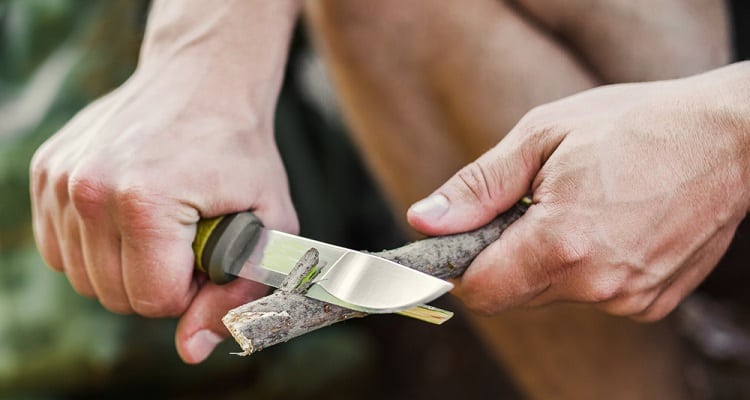
Your camp knife serves as the backbone of most outdoor activities. Food preparation becomes easier when you can slice cheese, fruit, and sausage or clean fish without needing kitchen tools.
Common bushcraft tasks include:
Your camp construction will run smoother when you can cut cordage for tent setup and carve stakes for securing tarps. Your knife also handles gear repairs around camp.
For precision work, control your blade movements. A 4-inch blade length offers the best balance between versatility and control for detailed tasks.
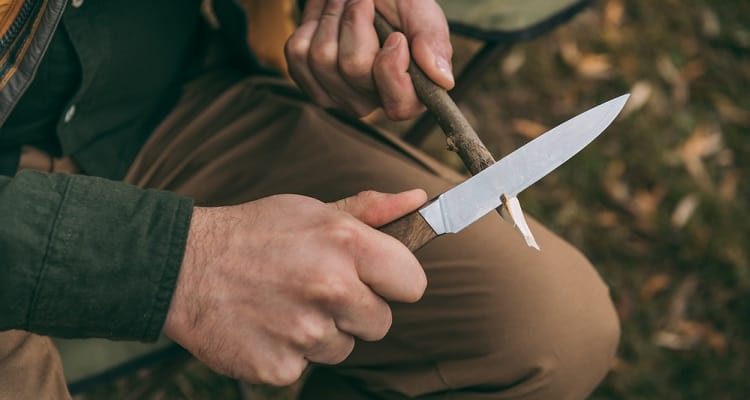
Your camp knife plays a crucial role in fire preparation and maintenance. Use it to shave tinder and split small kindling for better fire building results.
Fire-related tasks include:
The knife’s spine strikes a ferro rod well when it has a sharp, 90-degree edge. This technique creates hot sparks that ignite your prepared tinder.
Keep your blade sharp for efficient wood processing. Dull knives require more force and increase safety risks when splitting wood or shaving tinder.

Proper maintenance keeps your knife reliable throughout countless camping trips. Clean and dry your blade after each use to prevent corrosion and damage.
Essential maintenance steps:
Stainless steel blades resist corrosion better but still need care. High carbon steel requires more attention but holds sharper edges.
Store your knife in a dry place with good ventilation. Leather sheaths can trap moisture, so make sure everything is completely dry before storage.
Regular honing maintains the edge between sharpenings. Use your knife for its intended purposes to avoid damage and injury.
Choosing the right camp knife involves understanding blade materials, construction methods, and maintenance requirements. The most effective outdoor knives balance durability with practical features for specific camping tasks.
A quality bushcraft knife needs a full tang construction for maximum strength and reliability. The blade should be between 4 to 6 inches long, which provides the best balance for most outdoor tasks.
Look for a fixed blade design rather than a folding knife. Fixed blade knives are more reliable in survival situations because they have fewer moving parts that can break under pressure.
The handle should offer a secure grip even when wet. Materials like G10 or textured rubber work well for outdoor conditions.
A convex grind enhances cutting performance and maintains sharpness longer than other blade shapes. This makes your knife more effective for wood processing and food preparation.
Blade length directly affects what tasks your knife can handle effectively. A 4 to 5-inch blade works best for most camping activities including food prep and basic bushcraft tasks.
Longer blades above 6 inches provide more leverage for chopping wood and clearing vegetation. However, they become harder to control for detailed work like carving or food preparation.
Shorter blades under 4 inches excel at precise tasks but lack the power needed for heavy-duty outdoor work. They work well as backup knives or for specialized tasks like mushroom foraging.
The ideal length depends on your primary activities. Choose longer blades for survival situations and shorter ones for cooking and light camping tasks.
Fixed blade knives offer superior strength because they consist of one solid piece of metal extending into the handle. This construction makes them extremely reliable tools for outdoor survival.
You can deploy them instantly without fumbling with locks or mechanisms. In emergencies, quick access can be critical.
Fixed blades handle heavy-duty tasks better than folding knives. You can use them for chopping, prying, and other demanding activities without worrying about joint failure.
Maintaining fixed blades is simpler since they have no moving parts to clean or lubricate. This makes them more dependable during extended outdoor trips.

Stainless steel blades resist rust and corrosion, making them ideal for wet conditions. Stainless steel knives work particularly well for long trips or rainy weather.
Carbon steel holds a sharper edge longer than stainless steel but requires more maintenance to prevent rust. D2 carbon steel offers excellent durability for heavy use.
VG10 steel provides a good balance between edge retention and corrosion resistance. It’s found in high-quality outdoor knives and maintains sharpness well.
Handle materials should resist moisture and provide grip security. G10 fiberglass composite and quality rubber compounds work best for outdoor conditions.
Regular maintenance keeps your knife sharp and prevents rust or corrosion that can make it unreliable. Proper care includes cleaning, drying, sharpening, and lubrication.
Clean your knife after each use, especially when cutting food or working with sap and debris. Moisture left on the blade can cause corrosion over time.
Keep the blade sharp through regular honing. A dull knife requires more force and becomes dangerous to use in outdoor situations.
Store your knife properly in a dry sheath or case. This protects the edge and prevents accidental cuts while extending the blade’s lifespan.
Food-safe materials are essential for cooking knives. Stainless steel works best because it won’t transfer metallic tastes to food and you can clean it easily.
Choose a blade thin enough for precise cuts but thick enough to handle tougher tasks like cutting through bones or hard vegetables.
A 4 to 5-inch blade length gives you the versatility needed for camp cooking tasks. This size handles most food preparation and stays manageable around a campfire.
Pick a handle that stays secure when your hands are wet or greasy from cooking. Textured materials give you a better grip than smooth surfaces during food preparation.