Choosing the right knife for your kitchen can greatly improve your cooking experience. Both Santoku and Chef knives are popular all-purpose tools, but each suits different cooking styles and preferences.
The Chef’s knife offers more versatility for everyday cooking tasks, while Santoku knives excel at precise slicing and lighter prep work. Read Knife Buzz’s review to find out more.
Santoku and Chef knives each have unique strengths for specific cutting tasks. The blade shapes determines the cutting motion, while size and weight affect control and comfort. These differences affect how each knife performs in the kitchen.
Key Design Elements:
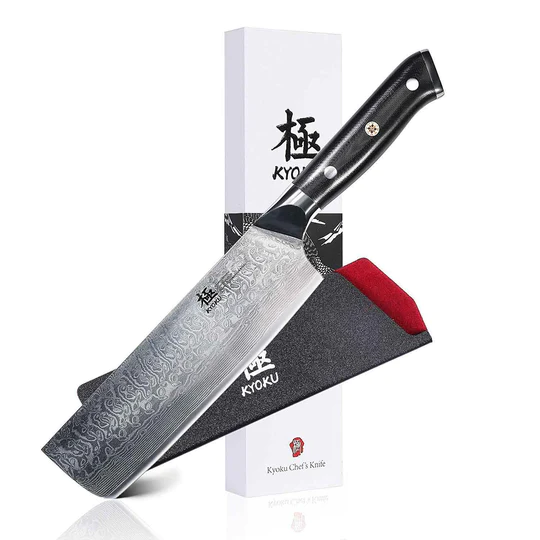
Santoku knives have a straight edge with a downward-curved spine, creating a flat cutting surface ideal for precise slicing. Many Santoku knives include hollow edges with indentations that create air pockets to prevent food from sticking.

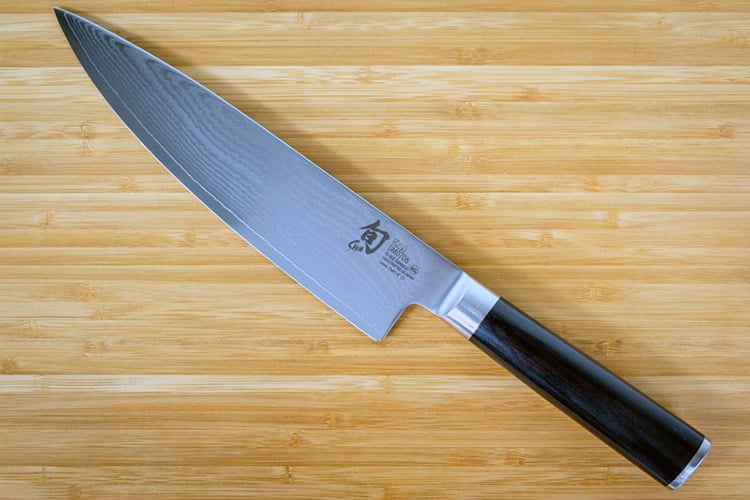
Chef knives have a curved edge that facilitates rocking motion. The blade curves from heel to tip, ending in a sharp point. Most Chef knives have smooth blade surfaces. The curved design lets different blade sections handle various cutting tasks.

The blade shape affects how you use each knife. Santoku knives work best with straight up-and-down chopping motions. The straight edge of Santoku knives makes rocking difficult. Forcing a rocking motion can cause hand stress.
Chef knives excel at rocking motions, allowing you to cut down and rock forward to complete each slice. When cutting bell peppers, a Chef knife lets you cut down and rock forward. A Santoku requires a single downward chop for each cut.
| Knife Type | Primary Motion | Best For |
|---|---|---|
| Santoku | Up-down chop | Precise slicing, dicing |
| Chef Knife | Rock chop | Quick dicing, mincing |
Santoku and Chef knives size advantages:
Santoku knives’ shorter blades give users more control. This makes them ideal for detailed work and precise cuts. Santoku knives usually range from 3 to 9 inches in blade length. The most popular size is 7 inches with a total knife length of about 11.5 inches.
Chef knives come in a wider size range from 4 to 14 inches or more. The most common blade lengths are 6 and 8 inches. Longer Chef knives make cutting large items like watermelons easier. The extended blade covers more surface area in each cut.
Santoku knives are generally lighter with thinner blades, reducing hand fatigue during extended use. The balance point also affects how the knife feels in your hand. Santoku knives often balance closer to the handle.
Chef knives have thicker, heavier blades that provide more cutting power. The extra weight helps when cutting through dense foods. Chef knives typically balance further forward toward the blade, which adds momentum to cutting motions but requires more control.
The performance differences between Santoku and Chef knives come down to blade design and cutting technique. Both knives need regular maintenance to perform well, and your cooking style determines which blade fits your needs.
Best cutting techniques by knife:
Santoku knives excel at precision cutting tasks like mincing herbs and dicing vegetables. The straight edge design makes clean cuts with a simple push-cutting motion.
The Santoku’s thinner blade creates less drag when slicing meat or delicate ingredients.
Chef knives offer more versatility for different cutting techniques. The curved blade lets you rock through ingredients when dicing onions or chopping garlic. You can also use the pointed tip for detailed work.
Chef knives handle tougher jobs like cutting through bones or thick vegetables better due to their weight and robust construction.
Both knives work well for everyday tasks like slicing tomatoes or chopping herbs. Your preferred cutting motion determines which feels more natural in your hand.
Santoku knives typically come sharper than Chef knives, with edges sharpened to 10-degree angles compared to 15-degree angles on most Chef knives. This creates an incredibly sharp edge.
However, the thinner Santoku blade will lose its edge faster with heavy use. Chef knives stay sharp longer because the thicker steel supports the cutting edge.
Single-bevel Santoku knives offer extreme sharpness but need special sharpening techniques. Double-bevel edges on both knife types are easier to maintain at home.
The hollow edge indentations on many Santoku knives help prevent food from sticking and maintain cutting performance even as the blade dulls slightly.

Both knife types need regular honing to keep their cutting performance. Use a honing steel before each cooking session to realign the blade edge.
Maintenance schedule:
Santoku knives need gentler handling due to their thinner construction. Avoid cutting on hard surfaces like glass or stone. Chef knives can handle more abuse but still need careful storage.
Whetstone sharpening works best for both knives. Start with 1000-grit stones for regular maintenance. Higher grits create polished edges on Santoku knives.

A good Chef knife will outperform a cheap Santoku for most tasks. Consider your cooking frequency and skill level when making your final decision.
Decision factors:
Choose a Santoku if you often prepare fish, vegetables, or Asian cuisine. The precise cuts and comfortable grip suit detailed knife work. Home cooks who prefer push-cutting motions find Santoku knives more natural.

Pick a Chef knife for general cooking versatility. The rocking motion speeds up prep work for large meals. Professional cooks often prefer Chef knives for their durability and multi-purpose design.

These knives differ in blade shape, cutting methods, and ideal tasks. Weight, maintenance needs, and kitchen versatility also vary between these two popular knife styles.
The most obvious difference is blade shape. Santoku knives are usually lighter with thinner blades. Chef knives have
thicker, heavier blades that can handle tougher cutting tasks.
Santoku knives have straight edges with downward-curved spines, while Chef knives feature curved edges that bend from heel to tip.
Santoku blades are typically 5 to 7 inches long. Chef knife blades range from 6 to 10 inches, with 8-inch versions being most common. Many Santoku knives have hollow edges with small indentations called grantons. These create air pockets that prevent food from sticking to the blade during cuts.
The curved blade of a Chef knife allows for rocking motions called “rock chops”. You can cut down and rock forward to complete cuts smoothly.
Santoku knives work best with straight up-and-down chopping motions. The flat edge makes rocking difficult and can stress your hands if you try.
When cutting bell peppers, a Chef knife lets you slice down and rock through. A Santoku requires separate downward chops for each cut. Chef knives also offer different functions along the blade length. You use the front for small jobs, middle for general cutting, and heel for tough items.
Santoku knives excel at slicing lighter, more delicate foods like seafood, soft vegetables, and cheese. The thin, sharp blade creates clean cuts without crushing delicate items. These knives work well for preparing sushi, sashimi, and thin vegetable slices. The hollow edge helps prevent food from sticking during precise cuts.
Santoku knives handle fish preparation and recipes requiring thinly sliced, uniform ingredients. The shorter blade gives you more control for detailed work. Chef knives handle bulky foods better. They cut through thick meat slabs, bones, large melons, and tough squashes more effectively.
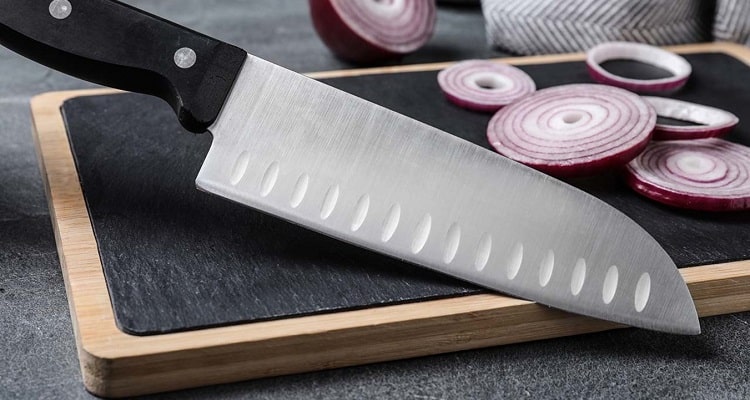
Santoku knives are typically sharper than Chef knives, with 10-degree edge angles versus 15-degree angles. They need careful handling and storage.
The sharper Santoku edge needs more frequent touch-ups but less aggressive sharpening. Maintain the proper angle during sharpening sessions. Some Santoku knives have single-bevel edges sharpened on one side only. These require special sharpening techniques and suit specific hand orientations.
Chef knives usually have double-bevel edges that are easier to sharpen. Most home cooks can maintain these knives with basic sharpening skills. Store both knife types in blocks, on magnetic strips, or with blade guards to protect the edges.
Santoku knives are generally lighter with thinner blades. This lighter weight reduces hand fatigue during long prep sessions. The shorter blade makes users feel like they have more control. You can make more precise cuts with less effort.
The lighter weight makes it harder to cut tough items. You need the blade weight to help power through dense vegetables and meat.
Chef knives have more heft that helps with chopping motions. The extra weight lets the blade do more work, requiring less force from your arm. The longer blade and heavier weight make Chef knives better for large cutting tasks. You can cut through bigger items in single motions.
You do not need both knives, but each excels in different areas. A Santoku can handle most daily cooking tasks that a Chef knife does. The main limitations come with heavy-duty cutting jobs. Santoku knives struggle with large bones, tough root vegetables, and big cuts of meat.
Chef knives handle almost anything a Santoku can, plus tougher tasks. Santoku knives cannot rock chop well because of their straight edges. This slows down certain types of prep work.
The shorter blade limits cutting large items. You might need several passes to cut through big vegetables or fruits completely.