

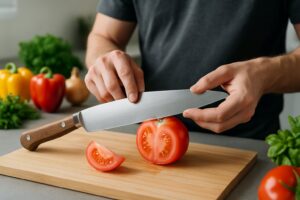

When you chop vegetables, both Nakiri and Kiritsuke knives offer impressive cutting power, but they serve different purposes in your kitchen. The Nakiri knife is better for chopping vegetables because it’s specifically designed for vegetable preparation, offering superior control and precision for this task compared to the more versatile Kiritsuke.
Understanding which knife fits your cooking style and skill level will help you make the right choice. Both knives have unique strengths that can transform how you prepare food, but your experience level and primary cooking needs should guide your decision.
The Nakiri specializes in vegetable prep with its rectangular blade and double-bevel design that makes it perfect for straight cuts through vegetables. Meanwhile, the Kiritsuke brings exceptional sharpness and length to handle multiple kitchen tasks, including vegetables, fish, and meat preparation.
Nakiri and Kiritsuke knives differ significantly in blade shape, with Nakiri featuring a rectangular design while Kiritsuke has a long, flat blade with a pointed tip. The Kiritsuke requires more advanced cutting techniques, whereas the Nakiri specializes primarily in vegetable preparation.
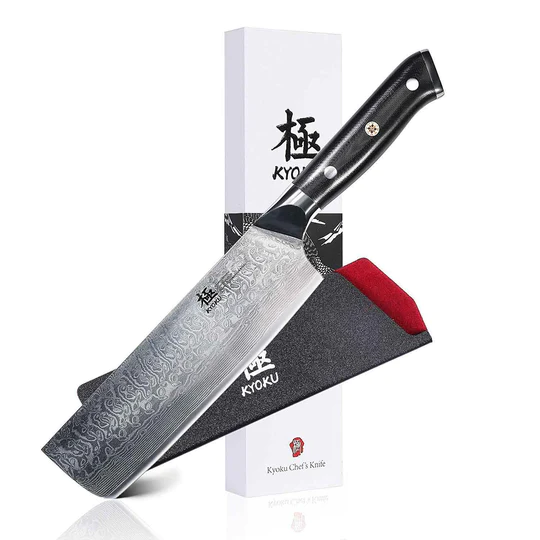
Nakiri knives feature a distinctive rectangular blade that looks similar to a small cleaver. The blade measures 5-7 inches long with a completely flat cutting edge.
| Feature | Nakiri | Kiritsuke |
|---|---|---|
| Length | 5-7 inches | 9.5-13 inches |
| Shape | Rectangular | Long, flat with pointed tip |
| Thickness | 1.5-2.5mm | 1-2mm |
| Tip | Blunt/square | Sharp, angled |
The Nakiri’s blunted tip and square design make it perfect for chopping motions. The blade thickness ranges from 1.5 to 2.5mm.

Kiritsuke knives have a much longer blade at 9.5-13 inches. They feature a flat profile with a sharp, angled tip that resembles a mini sword.
The Kiritsuke blade is thinner at 1-2mm thickness. Traditional Kiritsuke knives use single-bevel sharpening for exceptional sharpness, while most Nakiri knives have double-bevel edges.

Nakiri and Kiritsuke knives require different motions when cutting vegetables with each knife.
Nakiri knives work best with straight up-and-down chopping motions. The Nakiri’s flat blade design makes contact with the cutting board along its entire edge. This creates clean, precise cuts through vegetables without needing a rocking motion.
Kiritsuke knives demand more skill and experience. The longer blade lets you make continuous slicing motions through larger vegetables.
You can push-cut through vegetables using the Kiritsuke’s sharpness. The single-bevel edge pushes food away from the blade, reducing sticking.
The Kiritsuke’s pointed tip enables detailed work like brunoise cuts or intricate vegetable preparations. However, beginners often struggle with the balance and length.
Nakiri knives serve as dedicated vegetable specialists. These Japanese knives excel at chopping, dicing, and slicing vegetables of all sizes.
You can efficiently prepare leafy greens, root vegetables, and herbs. The Nakiri handles repetitive chopping tasks with minimal fatigue.

Kiritsuke knives offer broader versatility beyond vegetables. You can use them for fish preparation, meat cutting, and general kitchen tasks.
The Kiritsuke works well for:
However, the Kiritsuke requires much more skill to use effectively. Traditional Japanese kitchens only allowed experienced chefs to use Kiritsuke knives.
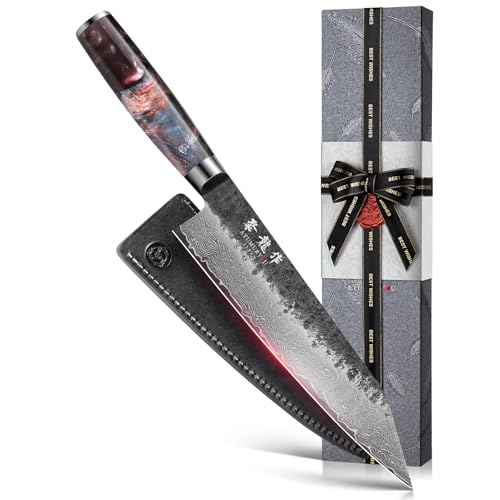
The Nakiri knife serves as Japan’s dedicated vegetable cutting tool, designed specifically for precise vegetable prep work. While it excels at chopping and slicing vegetables, its specialized design also creates certain kitchen limitations.
The Nakiri’s rectangular blade shape gives you maximum surface contact with vegetables. This design helps you make clean, straight cuts through produce without crushing delicate items.
Your cutting speed increases with a Nakiri knife. The flat edge lets you use an efficient up-and-down chopping motion instead of rocking back and forth.

The Nakiri typically measures 5-7 inches long, making it perfect for most vegetable prep tasks. You can slice through thick vegetables like potatoes and squash with minimal effort.
Modern Nakiri knives often feature stainless steel construction. This material resists rust and requires less maintenance than traditional carbon steel options.
The double-bevel edge on most Nakiri knives makes them easier to sharpen. You get consistent results whether you’re right-handed or left-handed.

The Nakiri knife works best as part of a larger knife collection. This means you will need other knives to complete your cooking tasks.
The Nakiri cannot handle:
Your Nakiri knife is great for vegetable cutting but the blunt tip prevents you from doing detailed work like deveining shrimp, trimming fat from meat, or chopping tough meats. And while the Nakiri looks like a cleaver, its thin blade can chip or damage when used on hard materials.
There is also a learning curve if you’re used to Western-style knives. You must adapt to the straight up-and-down cutting motion instead of the familiar rocking technique.
Storage can also be tricky due to the Nakiri’s unusual shape. Standard knife blocks may not accommodate the wide, rectangular blade properly.

The Kiritsuke stands out as one of the few traditionally multi-purpose Japanese-style knives, combining the precision of specialized tools with versatile functionality. This hybrid design delivers exceptional sharpness for slicing fish while handling vegetable prep and general kitchen tasks with equal skill.
The Kiritsuke’s versatility makes it valuable for cooks who want one high-quality knife for multiple tasks.
The Kiritsuke is best for:
Kiritsuke knives excel at preparing longer cuts of raw fish and deliver outstanding results for sashimi preparation. The long, flat blade makes clean cuts through delicate fish without tearing.
This knife also works well for vegetable prep. The sharp edge handles julienne cuts and precise vegetable slicing with ease. For slicing meat, the Kiritsuke handles softer cuts that don’t contain bones. The blade’s length and sharpness create clean, even slices.
Unlike knives with a curved blade design, the Kiritsuke features a completely flat cutting edge that requires an up-and-down chopping motion. This straight edge design promotes clean cuts without crushing delicate ingredients.
The blade typically measures 9.5 to 13 inches long, giving you excellent leverage for larger ingredients. This length makes handling whole fish fillets much easier than shorter knives.
Key performance features:
You need to adjust your cutting technique compared to Western knives. The flat design works best with straight downward cuts rather than rocking motions.
Most quality Kiritsuke knives use high-carbon steel. This material allows for exceptional sharpness and edge retention.
The traditional single-bevel design creates an extremely sharp cutting edge. This construction pushes food away from the blade in one direction, making precise cuts easier.
Construction specifications:
Modern versions called “Kiritsuke Gyuto” feature double-bevel edges for users more familiar with Western-style cutting techniques. These maintain much of the Kiritsuke’s performance while being easier to handle.
The thin blade profile and premium steel need careful maintenance. Proper sharpening and storage will keep your Kiritsuke performing at its best for years.
The best knife for vegetables depends on your cooking habits, hand size, and maintenance preferences. Your cutting technique and kitchen workflow will determine which blade style serves you better.
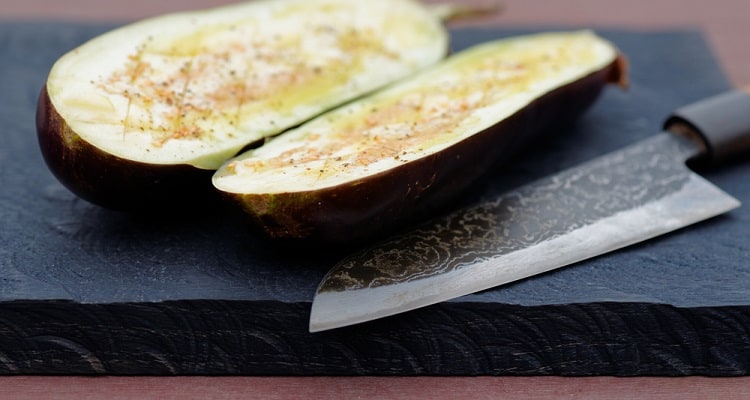
Your vegetable cutting needs should guide your knife choice between Nakiri and Kiritsuke options. If you prep large amounts of vegetables daily, the Nakiri’s rectangular blade excels at consistent, uniform cuts through carrots, onions, and leafy greens.
The Nakiri’s flat edge works perfectly for the up-and-down chopping motion that Japanese knives are designed for. This technique prevents the rocking motion that can bruise delicate vegetables.
For heavy vegetable prep:
For mixed cooking tasks:
Your experience level matters. Kiritsuke knives require more skill to handle safely due to their length and balance. Beginners should start with Nakiri knives for vegetable prep.

Your hand size and grip strength affect which knife feels comfortable during long vegetable cutting sessions. Nakiri knives usually weigh less and offer better control for smaller hands.
The shorter Nakiri blade creates less fatigue when chopping vegetables for long periods. Its balanced weight distribution reduces wrist strain compared to longer Kiritsuke designs.
Maintenance requirements differ between styles:
| Feature | Nakiri | Kiritsuke |
|---|---|---|
| Sharpening frequency | Moderate | More frequent |
| Edge complexity | Double-bevel (easier) | Single-bevel (harder) |
| Storage needs | Standard knife block | Longer storage required |
Japanese vegetable knives need proper care to stay sharp. Wash both styles by hand and dry them immediately to prevent rust.
Your budget affects long-term value. Higher-quality Nakiri knives often cost less than comparable Kiritsuke options while delivering excellent vegetable prep performance.
Consider your sharpening skills before choosing. Single-bevel Kiritsuke edges need specialized techniques that many home cooks find challenging to master properly.
Both knives have unique blade designs and cutting methods that affect how well they work with vegetables. The Kiritsuke offers more versatility while the Nakiri provides better precision for specific tasks.

The Nakiri’s rectangular blade shape gives you better control when chopping vegetables. Its flat edge touches the cutting board completely with each cut.
This design lets you make clean, straight cuts through vegetables without rocking motions. The blunted tip prevents accidental piercing of delicate vegetables.
The Kiritsuke has a longer, flatter blade that works well for precise cuts. Its pointed tip gives you more control for detailed vegetable work.
However, the Kiritsuke’s length can make it harder to control for quick vegetable chopping. The extra length works better for larger vegetables or longer cutting tasks.
You need to use an up-and-down motion with a Nakiri knife. This straight chopping motion works best with the rectangular blade shape.
The Nakiri doesn’t work well with rocking motions like western knives. You should lift the blade completely between cuts for best results.
With a Kiritsuke, you can use both straight cuts and some rocking motions. The pointed tip allows for more varied cutting techniques.
The Kiritsuke’s length means you need better knife control skills. Less experienced chefs may find the balance and length challenging at first.
The Nakiri’s rectangular shape gives you maximum cutting surface contact. This design creates clean cuts through vegetables without crushing them.
Its lightweight design makes it easy to handle during long vegetable prep sessions. The balanced weight reduces hand fatigue. The flat blade edge works perfectly for chopping motions. You get consistent slice thickness with each cut.
The Nakiri’s shorter length gives you better control over small vegetables. The 5 to 7 inch blade size fits most cutting tasks.
Yes, the Kiritsuke works well for many kitchen tasks beyond vegetables. It excels at making long, thin cuts in raw fish and other proteins.
You can use a Kiritsuke for general kitchen prep work. It handles softer meats and fish filleting tasks effectively.
The Kiritsuke’s length makes it good for larger cutting jobs. You can slice bigger pieces of food more easily than with shorter knives.
However, the Nakiri focuses mainly on vegetable work. It doesn’t perform as well with proteins or general kitchen tasks.
The Nakiri is easier for beginners to use safely. Its shorter blade and balanced design make it less intimidating to handle.
New users can master the Nakiri’s up-and-down cutting motion quickly. The technique feels natural after a few practice sessions.
The Kiritsuke requires more skill to use effectively. Experienced chefs prefer it for its precision and versatility.
Beginners may struggle with the Kiritsuke’s length and balance. The learning curve is steeper but the results can be more precise.
For precision vegetable work, the Nakiri gives consistent results with less practice. The Kiritsuke offers more precision but demands better technique.
Both knives need regular sharpening to maintain their cutting performance. The Nakiri typically has a double-bevel edge that’s easier to sharpen at home.
Sharpen your Nakiri every few weeks if you use it regularly. Use a whetstone with 1000 to 3000 grit for best results.
Traditional Kiritsuke knives often have single-bevel edges that require special sharpening skills. You may need professional sharpening services for best results.
Hand-wash and dry both knives immediately after use. Store them in knife blocks or on magnetic strips to protect the edges.
The harder steel used in both knives holds edges longer but can chip if dropped. Handle them carefully during cleaning and storage.